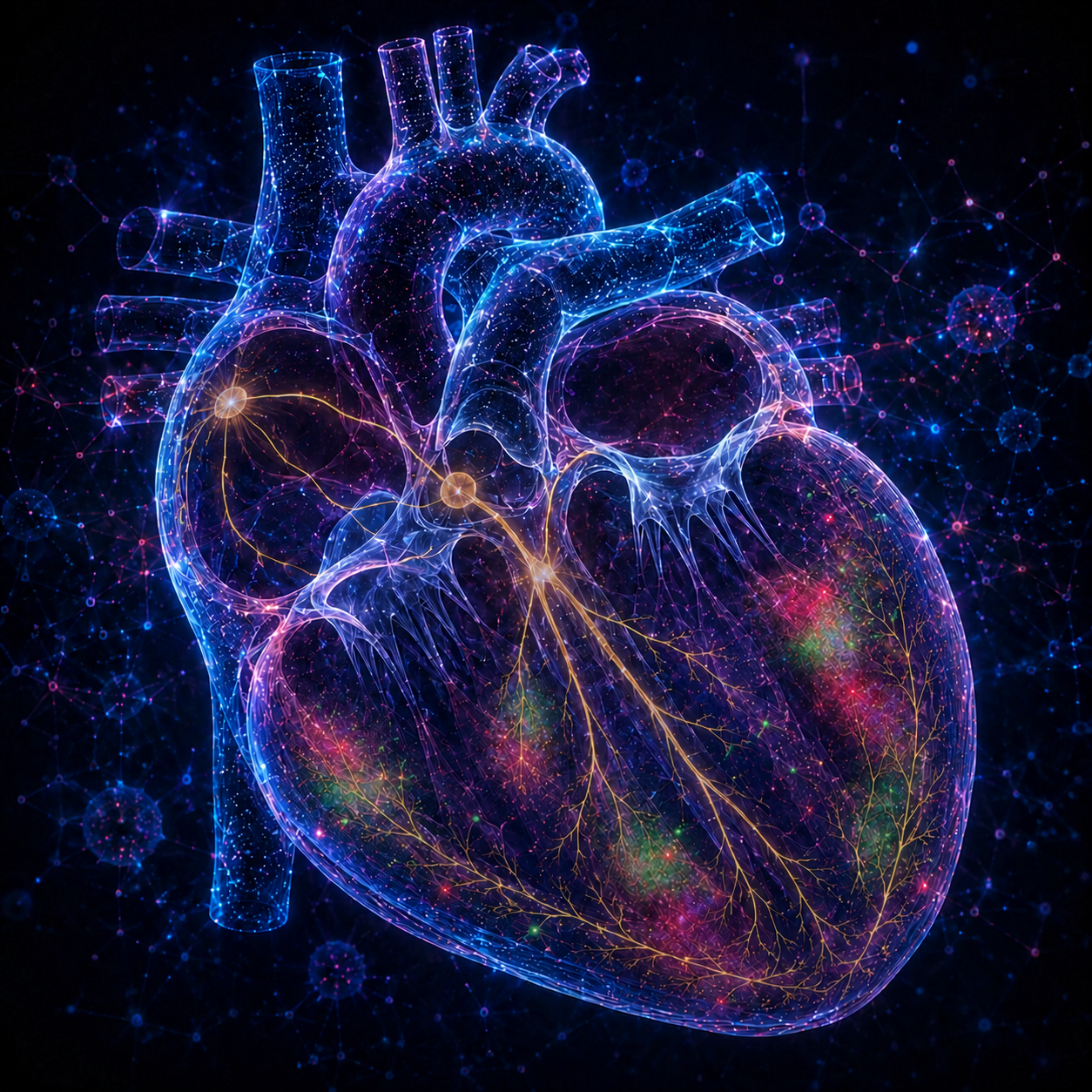
Mapping the Cardiac Microenvironment in Heart Failure
Heart failure reshapes the tissue around heart cells. We study how this cardiac microenvironment is remodeled across different forms of heart failure, a terminal disease with few effective treatments. We are interested in how the many cell types within a failing heart interact to drive disease progression and functional decline. To map these cells — cardiomyocytes, fibroblasts, immune cells, endothelial and perivascular cells — we combine single-cell and spatial genomics with experimental models in diseased human and animal hearts. Our central question is how diseased cells assemble into pathological niches. Answering it lets us identify the cellular circuits that drive maladaptive remodeling, and pinpoint diseased cell states that intervention might reverse.
Decoding Innate Immunity in Injury, Repair, and Organ Transplantation
Innate immune cells do far more than fight infection. We study how they regulate tissue injury, repair, and long-term remodeling across multiple organs, and how they coordinate with one another through cross-organ crosstalk. Our focus is on macrophages, dendritic cells, and natural killer cells, and on how they signal to the vascular and stromal compartments around them. A central interest is how these cells support tissue homeostasis in health and participate in repair after injury. In transplantation, we study the flip side: how the loss of resident innate immune cells in a transplanted organ can become a driver of graft failure.
Targeting Senescence and Inflammatory Remodeling
Cellular senescence is not simply a terminal state of damaged cells. It is an active biological program that can reshape the cardiac microenvironment. We study senescence as a dynamic and potentially reversible driver of heart failure, focusing on how senescent macrophages, cardiomyocytes, and vascular cells interact to amplify chronic tissue injury. In the heart, senescence may be genetically predisposed and then amplified locally through cell–cell communication. Across congenital heart disease, heart failure, and transplant, we aim to define how senescent cells propagate inflammation, metabolic stress, and paracrine disease signals. Ultimately, we hope to open new avenues for treating heart disease by selectively targeting senescent cells.
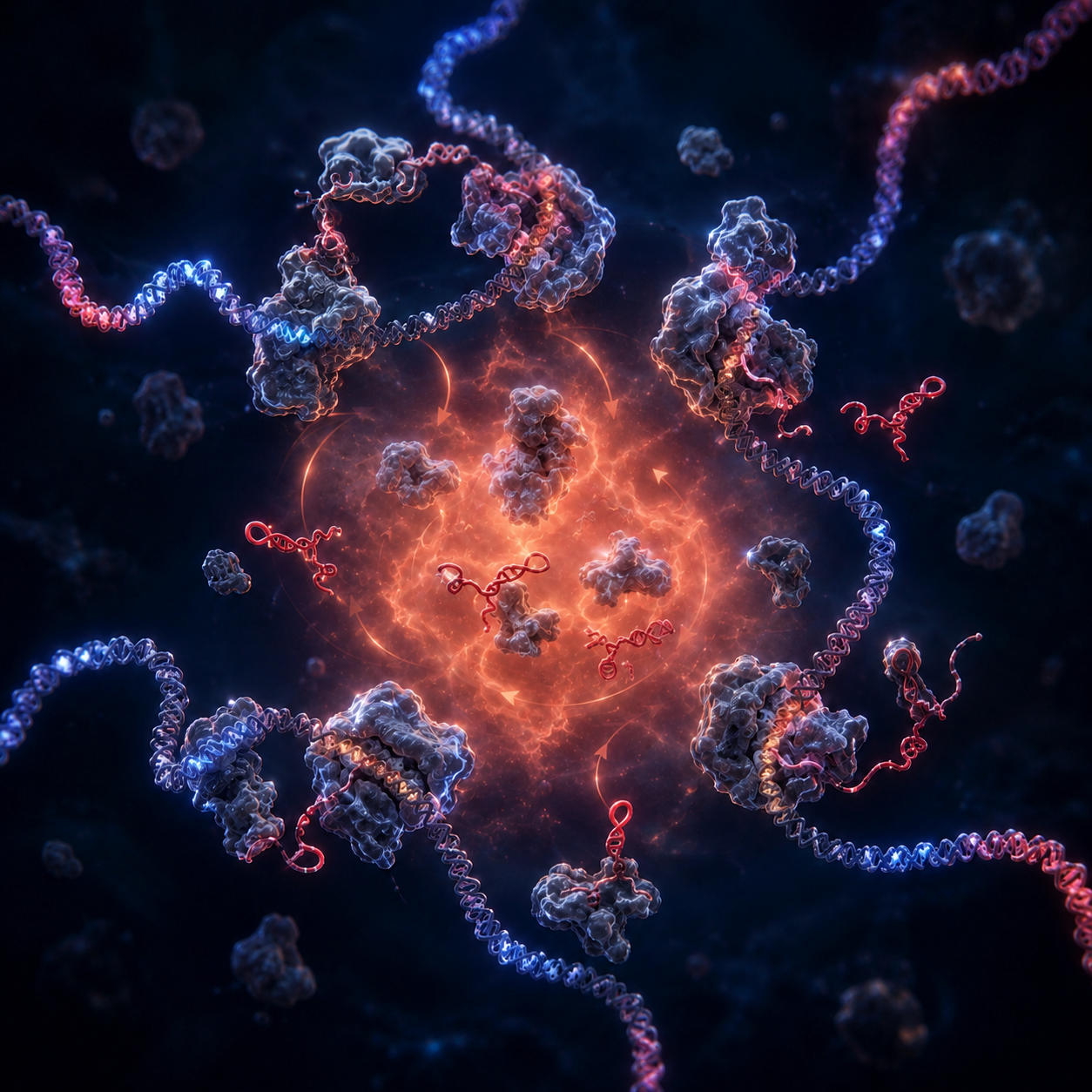
Linking Genome Architecture to Cell-State Regulation
A cell's identity depends not just on its genes but on how its genome is organized inside of its nucleus. We study how genome organization, chromatin state, and RNA–chromatin interactions control which genes are switched on and off in a coordinated fashion. Building on our expertise in genome architecture and chromatin-associated RNA biology, we examine how chromatin elements, domains, nuclear RNAs, and the three-dimensional folding of DNA shape cell identity, stress responses, and transitions into disease states. This direction links what happens inside the nucleus to traits we observe at the tissue level. It lets us ask whether changes in genome architecture can establish, maintain, or reverse the cellular programs behind disease.

Integrating Large-Scale Data for Systems-Level Discovery
Modern biology generates more data than any single experiment can interpret. We develop and apply data science approaches that turn complex, high-dimensional datasets into mechanistic insight, combining single-cell and spatial multi-omics, functional genomics, clinical data, and machine learning. Integrating data at scale gives us a systemic vantage point, revealing patterns that no single study can see and letting us compare across conditions to separate disease-specific signals from regulation shared across many contexts. For us, computation is not a separate analytical layer added at the end. It drives discovery — generating testable hypotheses, prioritizing candidate mechanisms, and connecting human tissue atlases with animal models. This framework underpins every direction above and enables systematic discovery across disease and health.